The Anti-Procrastination Machine

Recently my family relaunched an unusual project that we started more than two decades ago, but then let sort of fade into the background. Today it lives again! It’s a place where my mom (artist), dad (writer) sister (author) and I do art, short stories, cartoons and other things.

It is a website called Fine Words Butter No Parsnips. We named it after a strange old proverb that means “talk is cheap.” More on that later.
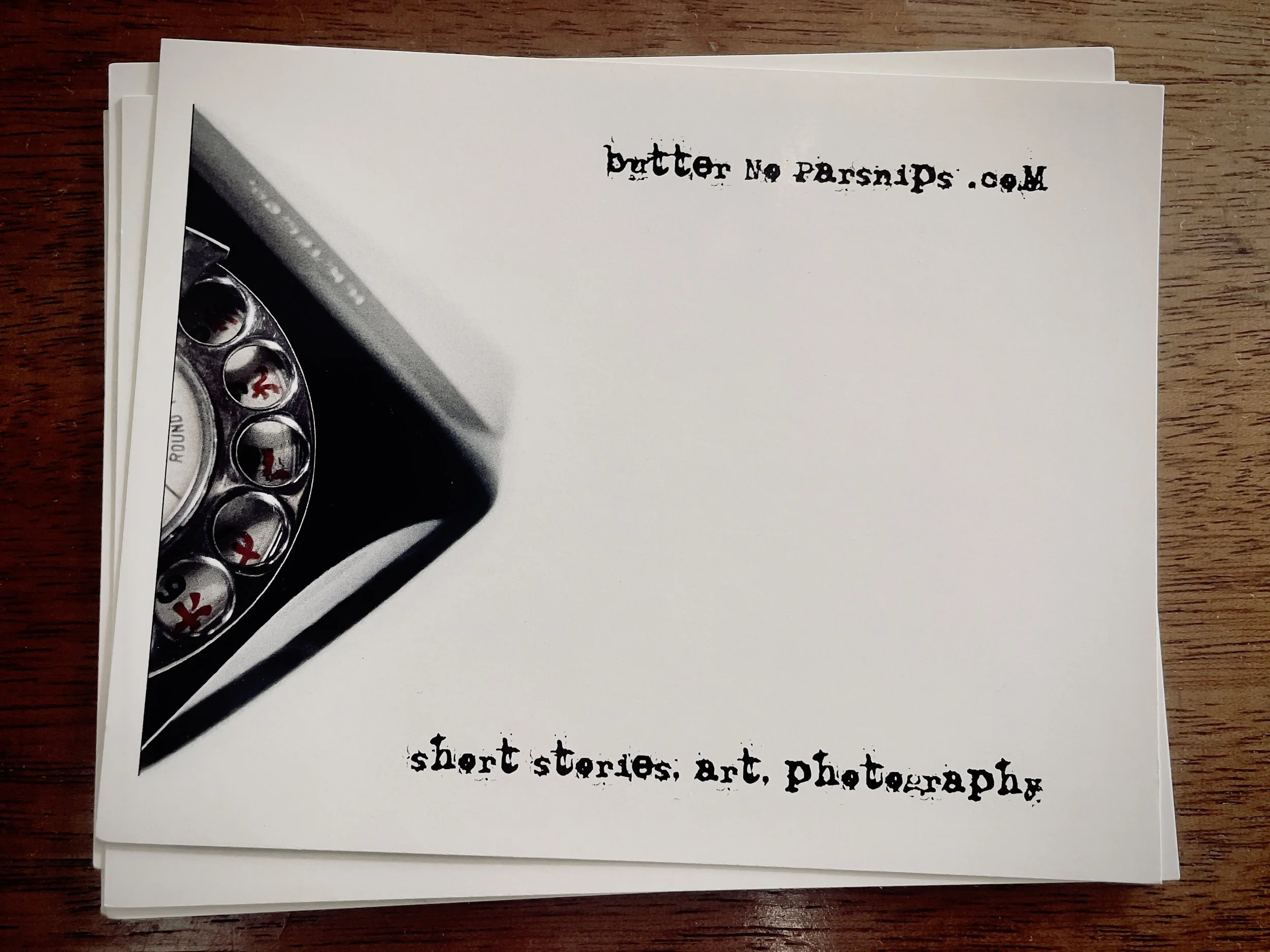
Postcards from the early ’00s when the site was new (and had a different URL).

It began back in 2004 with the optimistic idea that if we just built such a site, then maybe we’d actually feel obligated to do creative things to put there, instead of just talking about doing them. 

In other words, we built an anti-procrastination machine. 

And it worked. There’s nearly a quarter-century worth of things over there, please take a look. It’s an entertaining place to escape the day for a moment.

Here’s an example. Once upon a time my dad used the site to force himself to write a novel. He cranked out and posted a new chapter a week for the better part of a year. That’s amazing enough. But it also transformed the last 15 years of his life. He wrote more novels, sold trees worth of books, got nice notes from readers and enjoyed the hell out of it.

There came the lost years, when we added less and less new stuff. Life got in the way. There’s always an excuse, right? But now we’re back at it.

About the name. The proverb “fine words butter no parsnips” has been a recurring joke in our family as long as I can remember. If ever someone in the house made a boastful promise or floated a dubious claim, dad was ready with a smackdown straight out of the 1600s. “Fine words butter no parsnips,” he’d say. Talk is cheap.

That’s why we thought was the right name to give a thing that we hoped would force us into action. At this point we’ve been entertaining ourselves with it for 22 years. That’s a lot of years, but what will tomorrow bring? We’d love for you to stop by and see.

The Toaster Iron

Down the alley behind the place I’ve been staying in Delhi, the neighborhood iron-wallahs -- the guys who iron your clothes -- ply their trade. They work in the open air, at a wooden table.

A coal-powered iron and bread warmer.

Fifteen years ago I happened to live in an apartment just a block or so from this alley, so I know that the iron-wallahs previously commanded a “better” location for their business. Back then, they were out on the main street, not tucked away in the alley. 

Things were different then in other ways, too. For example, in 2001 the neighborhood still had open sewers. And the iron-wallahs’ wooden table straddled that sewer. Today the open sewers are history, so the iron-wallahs have a better work situation no matter where they set up shop.

Still, some things don’t change. Here we are at the dawn of the 21st century, and yet these two men still share an iron that is heated by burning charcoal placed inside. I stopped by recently and the coal iron was doing double duty as lunchtime bread warmer.

Fresh Adventure!

I have a fantastic new job, editing narrative and investigative projects at The New York Times. You can read about it here

My run at the WSJ -- first in New York, then Hong Kong, then New Delhi, then the Big Apple again, and finally India 2.0 -- provided the experience of a lifetime. If someone ever travels back in time and tells the childhood me that one day I’ll wander the world, writing, photographing and doing storytelling for money, I’ll tell them to lay off the schnapps.

Gunshot Mailbox

Gunshot Mailbox

I like this photo of a mailbox. But maybe not for reasons that first come to mind. 

I made the photo while out on a walk one day. It’s a simple enough idea. Who shoots their gun at the mailbox of love? But the image is just slightly out of focus, which bothered me. So I returned a few days later to try again. Same time of day -- the better to catch the sun repeating its trick, right?

Well guess what. Sun and Earth were no longer in the same alignment. The hard-hearted universe had moved on, one might say. 

I stood and waited, and the sun fell, and then suddenly the moment passed without happening again. We’re left with an imperfect image, capturing that special moment when a hostile sentiment -- namely, the mailbox of love with a bullet hole in it -- sparkled in the sun.

So that’s one thing I like about it, the trying again and failing. It fits the mood.

Looking Up the Road

The Pesta homestead is nestled in the woods, just off a winding lane that meanders past country churches, the coon hunters’ club, overgrown pioneer graveyards and the guy who tunes tractor-pull engines. I’m describing Starve Hollow Road. It’s been around a while. If you look at plat maps dating back 150 years, there it is, “Starved Holler.”

An old well in a cornfield along Starve Hollow Road.

An old well in a cornfield along Starve Hollow Road.

When I was a kid, Paul and Doris Herndon were our nearest neighbors on Starve Hollow Road. Doris collected pioneer recipes and had a remarkable wall of cast iron pioneer cookware in her kitchen. Doris and Paul lived in a tiny home that echoed a simple design favored by settlers of an earlier era -- two rooms, two front doors. In the hillside out back, a root cellar had been dug. 

Paul Herndon once befriended and tamed a wild turkey. The turkey would roost in a tree in front of the Herndon home, at a bend in the road, and gobble aggressively at passing cars. Paul knew where to find a wildcat den in the woods behind his place -- maybe a bobcat? Whatever it was, he took me there once as a kid when I bumped into him out there one day, where he was tapping maple trees. 

Paul disapproved of Starve Hollow Road being paved.

Today, Doris Herndon’s collection of pioneer recipes is in the hands of Molly, who lives in a curiosity cabinet of a converted barn a mile or two up the road. Molly claims to know where bootleggers’ stills used to be hidden in the wilderness out back, and she can tell you about the historic architecture of her barn. If memory serves, the barn is a traditional “three cross” design, referring to its framework of heavy timbers held together with wooden pegs.

When Molly first moved into her barn, many years ago, she had a horse problem. If she left the front door ajar, the horses who previously lived in the barn would clip-clop right into her living room.

The times are changing, horses! Anyway, this is the view from Starve Hollow Road.